Modular Solution for Cosmetics Compliance
Check the Conformity of your Formulas
Secure your regulatory documents for each zone
Optimize on-site risk management
Manage your Safety Data Sheets efficiently
Automate your regulatory monitoring
Ensure the traceability of your substances
Maintain good HSE risk management
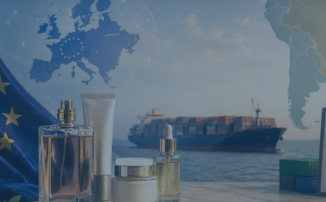
After more than twenty-five years of negotiations, the European Union and the Mercosur countries — Brazil, Argentina, Uruguay and Paraguay — finalized their trade agreement. Provisionally applied since 1 May 2026, the agreement marks a major step in economic relations between Europe and South America. For European companies in cosmetics, fragrance and home fragrance, the issue is twofold: benefiting from progressively improved commercial access to high-potential markets, while continuing to comply with regulatory requirements that remain largely national. Although the EU–Mercosur agreement creates new opportunities, it does not remove product registration obligations, labelling requirements or the need for a local responsible party in the countries concerned. For European brands, success will depend not only on commercial strategy, but also on early regulatory planning.
Recevez une fois par mois les dernières actus réglementaires et conseils d’experts.
Explore the complexities of CBD in food supplements, classified as Novel Foods in the EU. Despite growing market interest, no CBD forms are approved for supplements yet. Legalization efforts continue, with regulatory challenges and varying national laws shaping the landscape.
Stay compliant with California's updated cosmetics regulations by reporting products containing potentially hazardous ingredients. Check if your company meets the criteria, identify reportable products, and submit details via the California Safe Cosmetics Reporting Portal.
In January 2022, the Candidate List for authorization was updated with four new substances, including 4-MBC, the first endocrine disruptor primarily used in cosmetics. The list now has 223 entries, impacting many substances. Manufacturers must declare SVHCs in articles over 0.1% w/w.
The European Union's Chemicals Strategy for Sustainability aims to create a toxic-free environment by revising CLP and REACH regulations. These changes could significantly impact the chemical industry, potentially affecting 12,000 substances and leading to substantial economic costs.
California has adopted more stringent VOC limits for consumer products, with new or lower limits in seven categories. The new requirements will be phased in between 2023 and 2031. Learn how to comply and the impact of VOCs on health and the environment.
Explore the latest updates on European cosmetic regulations, including new allergen labeling requirements and DGCCRF control assessments. Discover the impact of China's CSAR on global cosmetics, emphasizing lifecycle compliance and reinforced controls.